This edition marks a shift. The previous three issues were led by property and market data. This one opens a new series: resort-by-resort family intelligence — the operational detail that determines whether a ski week with children actually works, and which almost no English-language source covers with any rigour.
🏔️ MARKET INSIGHT
The Family Intelligence Gap
Search “Courchevel property price” and the results are exhaustive. Search “how to ski Baqueira with a six month old” and they are nearly nonexistent.
This is not a small gap. Affluent families planning a ski week make decisions on logistics long before they make decisions on price — which resort has reliable childcare, which zone avoids road crossings with small children, which mountain hut is worth a detour. None of this is covered with any rigour in English-language ski media.
The resorts that have quietly solved this — through infrastructure rather than marketing — are building a different kind of value. Not appreciation in €/m². Loyalty across generations of the same families, returning year after year because the operational friction of the holiday has been engineered away.
This edition launches a series covering exactly that, resort by resort. Baqueira Beret and Val Gardena are first.
🏠 PROPERTY SPOTLIGHT
Val de Ruda: The Logistics Premium
Val de Ruda at Baqueira Beret commands the highest property prices in the valley — €11,500/m² against a resort average of €7,500/m². The premium is not generic prestige. It is structural.
Direct gondola access from 1,500 to 1,850 metres means small children never cross a road between the property and the lifts. For a family with toddlers, this single design feature removes the most stressful ten minutes of every ski day.
The same logic applies wherever true ski-in ski-out positioning commands a premium across the Alps and Dolomites — Mont d’Arbois at Megève, Courchevel 1850’s village centre. The market prices convenience correctly. What it rarely articulates is why — the actual friction being removed for families with young children.
Explore the asset analysis in the Baqueira Beret Property Guide
⛷️ RESORT RECOMMENDATION
Two Resorts. Two Different Solutions to the Same Problem.
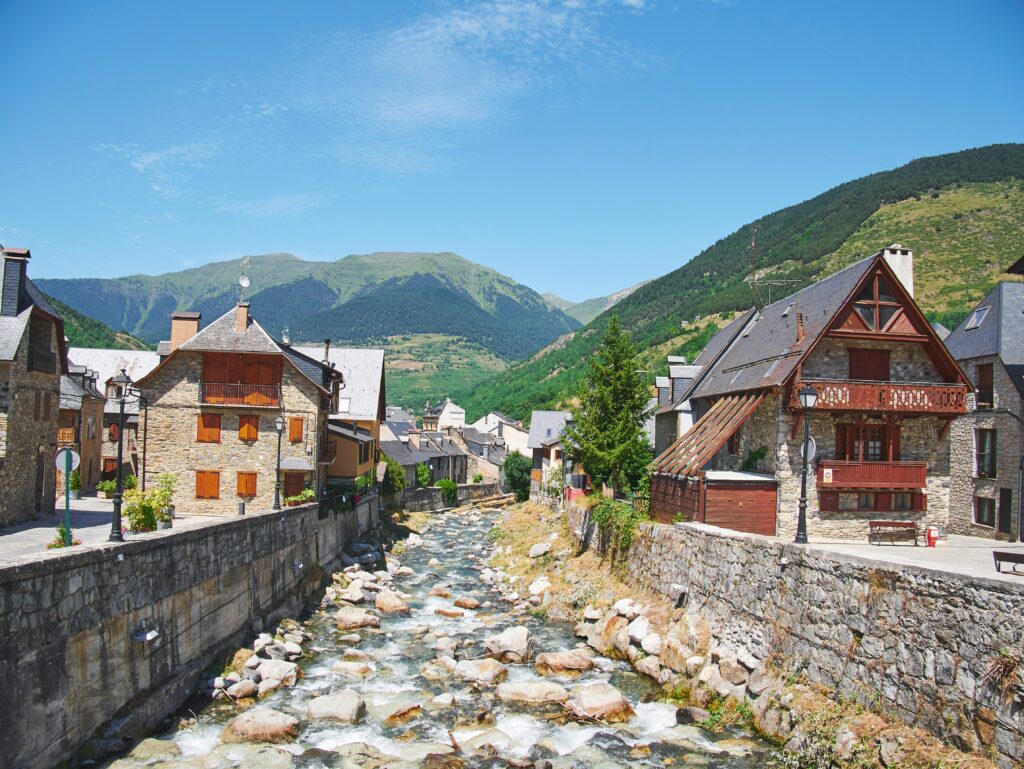
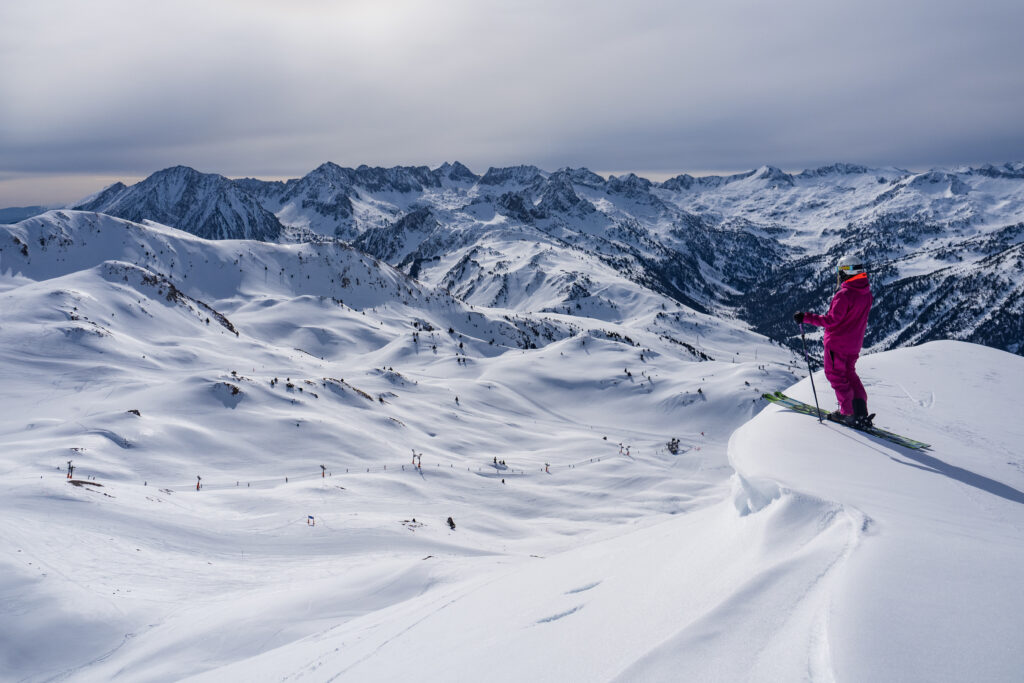
Baqueira Beret has been the preferred family ski destination of Spain’s wealthiest families for six decades — and remains almost entirely undocumented in English. Spanning 169 kilometres across four sectors — Baqueira, Beret, Bonaigua and the high-altitude Baciver — the resort operates SnowCAMP, an official network of mountain nurseries taking children from six months old, with paediatric-certified staff and a private snow garden on the mountain. Ticolet, on the Plaza Fòrum since 1964, remains the institution for family dinners — raclette, two sittings nightly, booked weeks in advance in high season.
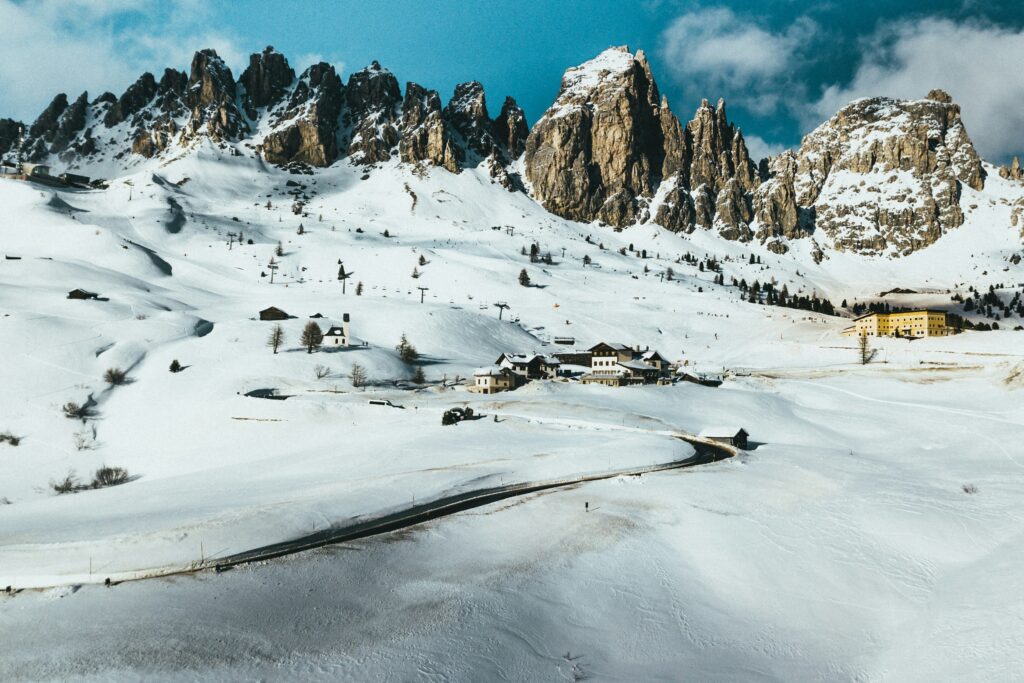
Val Gardena solves the same problem differently. Sitting inside a UNESCO World Heritage Site in the Dolomites, the valley’s three villages — Ortisei, Santa Cristina and Selva — operate across three native languages, with English widely spoken throughout. Ski schools here carry official regional government recognition for the quality of their children’s instruction. At 2,154 metres, Rifugio Comici serves fresh seafood on the Sella Ronda route; at 2,410 metres, Sofie Hütte pairs a children’s bouldering wall with house-distilled gin for the parents.
Both resorts reach the same conclusion from different directions: family skiing works when the infrastructure is built for it, not improvised around it.
Read the field intelligence in the Baqueira Beret Family Guide
📊 INVESTMENT DATA POINT
The SnowCAMP Framework — Why Age-Specific Infrastructure Matters
Most resort childcare provision is undifferentiated — a single crèche, loosely age-banded, minimal continuity between daycare and formal instruction. Baqueira’s SnowCAMP network is structured differently, and the structure is the data point worth noting:
Baby SnowCAMP (6 months–3 years): Indoor/outdoor nursery, private snow garden, sensory and motor development. Accessed by road.
SnowCAMP age 3–6 (multiple sectors): Equipment familiarisation, snow carousel, conveyor belt introduction — bridging daycare and formal ski school before children ever stand on an open piste.
Formal ski school (age 5+): Resort-wide network, multiple languages, consistent standard across providers.
Val Gardena runs a parallel system under different branding — supervised “Mini Club” programmes from age two, full-day courses with lunch included, and dedicated children’s areas at every village separate from the main piste network.
The pattern across both resorts: continuity between nursery and formal instruction, rather than a single undifferentiated facility, is what allows children to progress without friction. Few alpine or Dolomite resorts publish this level of structural detail. Few alpine or Dolomite resorts publish this level of structural detail. Fewer still have built it this deliberately. The family intelligence series continues next with Megève, Gstaad and Crans-Montana.
Read the complete analysis in the Val Gardena Family Ski Guide →
That is the fourth edition of The Alpine Intelligence.
If this briefing was forwarded to you and you would like to receive future editions, subscribe at newsletter.alpineluxeliving.com.
If you have questions about any of the resorts or markets covered, reply directly to this email.
Nick Scarpetta
Founder, Alpine Luxe Living
alpineluxeliving.com
Instagram: @AlpineLuxeLiving